

Harvard Business School
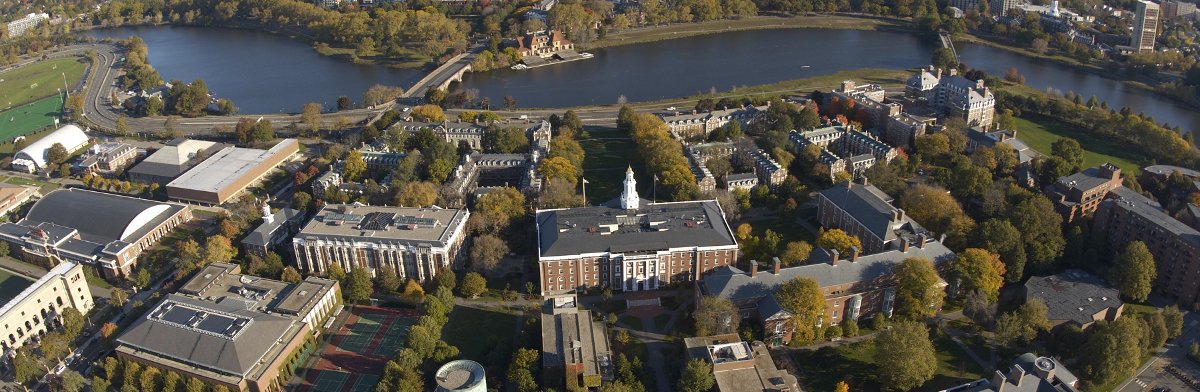
Harvard Business School (HBS) is located in Boston, Massachusetts, just a short trip away from the University’s main campus in Cambridge. The first school in the world to offer the Master’s of Business Administration degree, HBS has a full-time MBA program known for pioneering the case method of business instruction. The case method continues to be one of the hallmarks of the HBS MBA program today, in addition to the school’s highly structured Required Curriculum and emphasis on cultivating young leaders.

LiveWire Data Dashboard
FAQ
What is the tuition for Harvard’s MBA program?
The tuition for Harvard’s MBA program is $78,700 per year. The total cost of the Harvard MBA program is $126,536 per year; this includes budgeted living expenses.
How hard is it to get into Harvard’s MBA program?
The acceptance rate for Harvard is 13.2%. It is important to consider the acceptance rate in the context of the student profile of those who are admitted. For example the median GMAT (10th edition) score is 730.
What is the median GMAT score for admission to Harvard’s MBA program?
The median GMAT (10th edition) score for the incoming class at Harvard is 730. The median GMAT (Focus) score is 685.
Does the Harvard MBA program accept the GRE?
Yes. The Harvard MBA program has accepted the GRE for a few years now.
What are the median GRE scores for admission to Harvard’s MBA program?
The median GRE scores for the incoming class at Harvard are Verbal 164 and Quantitative 164.
What is the minimum number of years of work experience required for admission to Harvard’s MBA program?
Harvard does not state a minimum requirement for years of work experience. However, it is important for candidates to be aware that they are being considered against other candidates with an average of 4.9 years of experience.
What is the average number of years of work experience for admission to Harvard’s MBA program? (or, What is the average age of a Harvard student?)
The average number of years of work experience among students in Harvard’s MBA program is 4.9.
What is the median starting salary for graduates of the Harvard MBA program?
The median starting salary for Harvard MBA graduates is $184,500, with a median signing bonus of $30,000.
How long is Harvard’s full-time MBA program?
Harvard offers a traditional 2 year MBA program.
What are the application deadlines for Harvard’s MBA program?
The Round 1 MBA application deadline is September 3, 2025. The Round 2 application deadline is January 5, 2026. Application materials are due by noon EST on the day of the deadline.
What percent of Harvard MBA students are women?
The percentage of the class at Harvard that are women is 44%.
What type of interview does Harvard use for MBA admissions?
Harvard offers interviews by invitation, once the initial application is reviewed. The interviews are application-based, meaning the interviewer will have read your application or reviews of your application.
When does Harvard release MBA interview invites for Round 1?
The first 2025-2026 Round 1 interview invite from Harvard was reported on LiveWire on September 29, 2025. Harvard releases interview invites in one day.
When does Harvard release MBA interview invites for Round 2?
The first 2024-2025 Round 2 interview invite from Harvard was reported on LiveWire on January 28, 2025. Harvard releases interview invites for a given round in one day. Based on prior years, 2025-2026 applicants can expect Round 2 interview invites at the end of January 2026.
When does Harvard release MBA decisions?
For Round 1, Harvard posts a decision date of December 10, 2025. For Round 2, Harvard posts a decision date of March 25, 2026.
Admissions
Class Profile
HBS received 9,409 applications for the Class of 2027 and 943 ultimately enrolled. The year prior, the MBA program received 9,856 applications and landed at a class size of 930.
The median GMAT (10th edition) score of first-year entrants was 730, and the middle 80% of scores ranged from 690 to 760. The median GMAT (Focus) score landed at 685 with the middle 80% of scores ranging from 645 to 735. Thirty-four percent of first-year applicants submitted GMAT (Focus), 28% GMAT (10th edition) scores and 44% GRE scores. The median Verbal and Quant scores both landed at 164.
Engineering was the most popular undergraduate major, as 24% had studied it. Twenty-two percent had a background in business/commerce and another 19% each had majored in economics or math/physical science during their undergraduate years. Eleven percent of the new class had majored in the social sciences. Of the students who attended undergraduate institutions that graded on a 4.0 scale, the average GPA was 3.76.
The HBS Class of 2027 averaged 4.9 years of work experience. Prior to attending HBS, 19% worked in consulting, 16% worked in venture capital/private equity, and 13% in tech. Ten percent worked in financial services. Nine percent each hailed from consumer products/retail/e-commerce.
Thirty-seven percent of the Class of 2027 claims international citizenship. In addition, women comprise 44% of the first-year class, and 46% identify as members of a U.S. minority group.
Application Procedures
Applicants can apply to HBS during one of two admissions rounds; these deadlines are typically in early September and early January. In addition to filling out an online application regarding their biographical information and career history, applicants must submit three essay responses, a résumé, two letters of recommendation, and transcripts from all undergraduate and graduate academic institutions attended. The school also requires applicants to submit GMAT or GRE scores and a TOEFL, IELTS, PTE, or Duolingo score if needed, as well as a $250 application fee and a signed acceptance of the school’s admissions policies. Harvard’s MBA Admissions Board conducts interviews on an invitation-only basis, and interviews are required for admission to the program. HBS also requires a post-interview reflection exercise.
Application Checklist
- Data Forms
- Acceptance of HBS Admissions Policies
- GMAT/GRE and TOEFL/IELTS/PTE/Duolingo Score(s)
- Résumé
- Application Fee
- Recommendation Letters
- Academic transcripts
- Essays
Essay Topic Analysis
Recommendation Questions
Harvard Business School Q&A's
Harvard Business School LiveWire and DecisionWire
Academics
Faculty
Over 270 full-time faculty members at Harvard Business School work across the school’s 10 academic units. These scholars and practitioners teach courses and staff the school’s ten global research centers and 21 initiatives, which cover topics from business history to U.S. competitiveness.
Curriculum
One of the hallmarks of HBS’s MBA program is its extensive use of the case method, in which class discussions revolve around assigned readings based on real-world business problems. Professors also use computer simulations, problem sets, and group assignments to help convey course material.
Harvard’s MBA curriculum takes place across four semesters of 15 to 18 weeks each, referred to as Fall and Spring Terms. All students spend the first two semesters of the MBA program taking 13 courses, known as the Required Curriculum or “RC” for short. Following a three-day orientation period, Fall Term of RC classes begins in early September, featuring six semester-long courses that focus on issues businesses face internally. Fall Term ends in mid-December. Spring Term, which lasts from the end of January through late May, is comprised of six semester-long courses that examine how an organization interacts with external groups in a variety of social and economic contexts. One of the Spring Term RC courses, FIELD Global Immersion, challenges students to tackle a real-world business issue faced by the global company they are partnered with. At the conclusion of the course, students take a week-long immersion trip to visit the global company partner and experience the country that their partner company is located in.
In the second year, known as the Elective Curriculum (EC), students may take up to five full-term courses per semester. EC students could choose from over 100 full-time electives across 10 subject areas in addition to field learning opportunities. Unlike most MBA programs, HBS does not offer any formal majors or concentrations, instead allowing students to shape their second-year curriculum however they see fit. Though HBS students may not study abroad, EC students can cross-register for up to two full-term courses at Harvard University graduate schools or at several other institutions in the Boston area. In addition, HBS’s required Field Global Capstone allows students to gain global exposure through short-term experiential learning opportunities in 29 countries that have included China, Peru and South Africa.
Other MBA Degree Options
In addition to its 22-month full-time MBA program, HBS offers a joint JD/MBA program with Harvard Law School, an MD/MBA and an MS/MBA Biotechnology: Life Sciences with program with Harvard Medical School, a DMD/MBA with Harvard School of Dental Medicine, and a MBA/MS with the Harvard School of Engineering & Applied Sciences. HBS also offers an MBA/Master of Public Policy and an MBA/Master of Public Administration in International Development in conjunction with the Harvard Kennedy School.
College students hoping to attend HBS in the near future can apply during their senior year via the 2+2 Program. Students accepted through 2+2 are granted advanced admission to the full-time MBA program upon completing at least two years of professional work experience in an HBS-approved position.
Required Courses at HBS
Term I
- Finance I
- Financial Reporting and Control
- Leadership and Organizational Behavior
- Marketing
- Technology and Operations Management
- Strategy
Term II
- Business, Government, and the International Economy Strategy
- Data Science & AI for Leaders
- Finance II
- Leadership and Corporate Accountability
- FIELD Global Capstone
- The Purpose of the Firm
Degree Offerings at HBS
Full-time MBA Program
Joint Degree Programs
MBA/MPP, MBA/MPP-ID, JD/MBA, MD/MBA, DMD/MBA, MBA/MS
http://www.hbs.edu/mba/academic-experience/joint-degree-programs/Pages/default.aspx
Doctoral Programs
Doctorate of Business Administration: Accounting & Management, Management, Marketing, Strategy, Technology and Operations Management
PhD Programs: Accounting & Management, Health Policy (Management), Marketing, Strategy, Technology and Operations Management, Business Economics (Includes Finance)
http://www.hbs.edu/doctoral/
Campus Life
Clubs, Conferences & Competitions
HBS students are provided with many opportunities for extracurricular involvement. Full-time MBA students can choose from more than 95 student-run clubs, which cover a variety of industry, regional, social, and sports interests. For example, the Outdoors Club organizes outdoor treks during the winter and spring breaks, in addition to skiing, hiking and rafting trips throughout New England. Meanwhile, members of the Tech Club host industry speaker series, an annual alumni panel and dinner, and visits to leading high tech and media companies. The Student Association, of which all HBS students are members, represents the school’s student body as a whole.
HBS’s clubs organize a number of conferences on campus annually. These span industry-related events, such as the Healthcare Club’s annual Healthcare Conference, as well as affinity-related events including the Women’s Student Association’s annual Women in Business Conference. Students can also participate in a variety of business competitions. One of the most popular is the New Venture Competition, in which teams of students pitch business ideas to a panel of judges and compete for a total of $315,000 in prizes.
Campus Space
The HBS campus is located in the Allston neighborhood of Boston, just across the river from Harvard University’s main campus in Cambridge. HBS’s campus encompasses 36 buildings in total, with the majority of classes held in Aldrich Hall and Hawes Hall. Tata Hall is an Executive Education building located on the Northwest corner of the campus. This seven-story glass and brick building includes residential space, classrooms, and common areas for Executive Education participants. Meanwhile, the Spangler Center is the hub of student social activity, featuring 29 project rooms, a 350-seat auditorium, and the school’s main dining facilities. Two-thirds of HBS students live on campus, with over one-third choosing to live in the school’s five residence halls, and there is a large selection of other housing options available through Harvard University Housing and private listings.
MBA Careers
Career Services
The MBA Career & Professional Development program provides HBS students with a range of services to help them clarify and achieve their career goals, including one-on-one coaching, company connections, resume writing, interview preparation, and access to online career education resources.
The school’s dedicated on-campus interview period for first-year students begins in late January, with firms encouraged to hold job offers open until early February. In advance of the first-year recruitment period, HBS holds Industry Weeks, a series of presentations and panels that help students learn more about different job sectors. In addition, the school has over 30 trained career coaches on staff to offer students individual advice throughout their entire time at HBS. MBA Career & Professional Development also helps recruiting companies develop a presence on campus through events such as company presentations and one-on-one or small group “coffee chat” information sessions.
Career Statistics
Sixty-five percent of the HBS Class of 2025 sought employment post-MBA. Of those, 90% secured offers and 84% accepted offers within three months of graduation. Thirty-five percent of the MBA Class of 2025 did not seek employment. Seventeen percent started their own business and 14 percent were company sponsored or already employed. The median base salary of all graduates was $184,500, with 58% reporting a median signing bonus of $30,000.
In terms of industry, 34% joined financial services, which is broken down into several branches. Fourteen percent had entered private equity and four percent went into venture capital. Seven percent pursued roles in investment management / hedge funds and six percent in investment banking.
Technology claimed 22% of the HBS Class of 2025. Twenty-one percent entered the consulting industry, and 6% went into health care.
As is often the case at business schools, HBS placed a large number of graduates, 48%, in the region where it is located: the Northeastern U.S. Twenty-four percent of the Class of 2025 headed to the Western U.S., while 6% moved to the Mid-Atlantic. Five percent each landed in the Southwest or Midwest. Eight percent of the class took jobs outside of the United States, with the most popular areas being Asia and Europe at 3 and 2 percent, respectively.
Financing
The tuition for students entering in 2025 is $78,700. HBS estimates, though, that with additional expenses such as course materials, student fees and cost of living, single students will pay approximately $126,536 for the year. The school offers need-based fellowships to help students fund their education. To be considered for these awards, students must fill out the FAFSA and a financial aid application that is made available on the HBS Intranet after admission to the program. HBS students can also finance their studies through a variety of loan options, such as federal programs for U.S. citizens and private loans for domestic and international students. The Harvard University Employees Credit Union allows international students at HBS to take out loans without a U.S. co-signer.
HBS MBA Program Tuition (per year)
- Tuition $78,700
- Student Health Fee $1,800
- Student Health Insurance Plan $4,308
- Course & Program Materials $2,800
- Housing & Food (9 months, single) $28,000
- Transportation (9 months) $2,360
- Other Living Expenses (9 months, single) $8,568
- Total $126,536
Recent News
Contact
Mailing Address:
MBA Admissions
Harvard Business School
Spangler Welcome Center (Spangler 107)
Boston, MA 02163
Phone: 617-495-6128
Email: [email protected]
Web: www.hbs.edu
Blog: https://www.hbs.edu/mba/blog
X (Twitter): @HBSadmissions